.png)
.png)

Different Types of Golf Clubs
Which golf clubs should you have in your bag?
As golfers, Rule 4.1b allows us to carry a maximum of 14 clubs in our bag. The rule went into effect in 1938, and before that, you were actually allowed to play with as many clubs as you wanted. There’s no exact answer as to why we settled on 14 clubs, and I think it’s something we golfers rarely reflect on. Let’s take a closer look at the different types of clubs we have in our bags and what their characteristics are.
THE CLUBS YOU CAN CHOOSE FROM
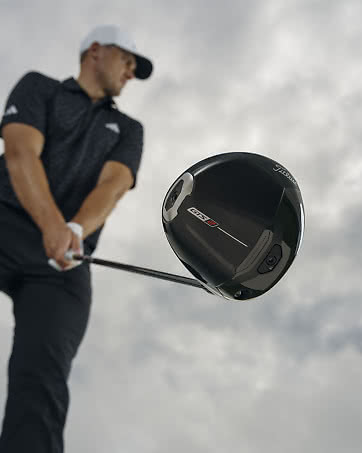
Driver
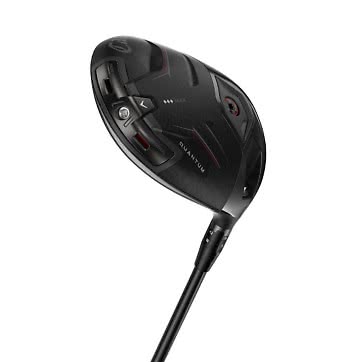
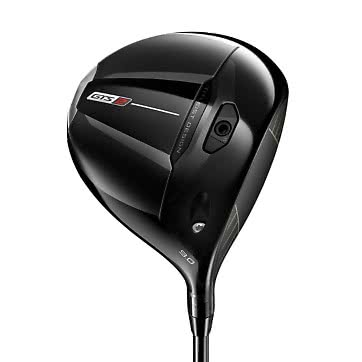
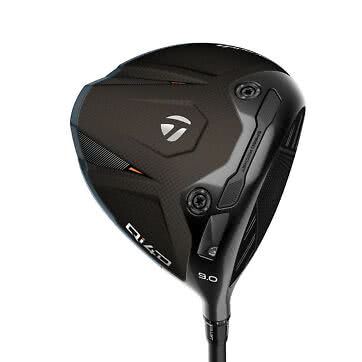
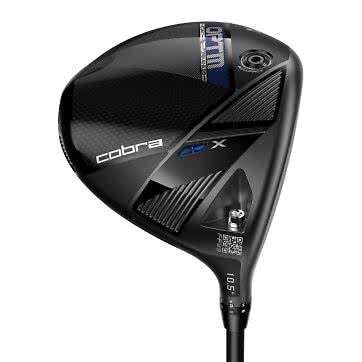
The driver is the club with the longest shaft and largest clubhead, which makes it harder for many golfers to hit. The low loft and distance from the body mean you swing differently compared to other clubs and hit the ball upward. The club’s difficulty depends on the weight placement in the clubhead: weight far back provides more spin and a higher launch (easier to play), while weight near the clubface provides less spin and a lower launch (harder to play). To reduce a slice, you can choose a driver with offset or weighted to counteract a fade/slice.
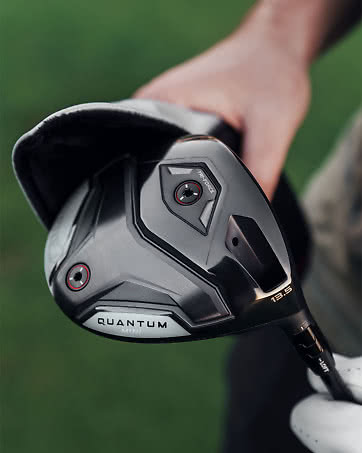
Mini Driver
A mini driver can be described as a cross between a driver and a fairway wood. The clubhead is smaller than that of a traditional driver, and the shaft is usually slightly shorter. This makes the club easier to control and popular among golfers looking for more accuracy off the tee without sacrificing too much distance.
Mini drivers are primarily used off the tee but also work well from the fairway for players with higher swing speeds. Thanks to the smaller clubhead and more compact shape, many golfers experience better control over the ball’s trajectory compared to a standard driver.
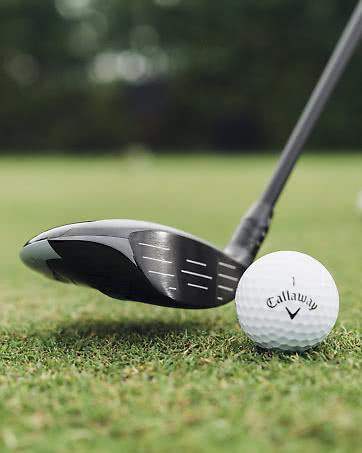
Fairway Wood
A fairway wood can be described as a smaller version of a driver. It works just as well from the tee as it does from the fairway, while also performing well from the rough. The loft of a fairway wood typically ranges between 15–24 degrees.
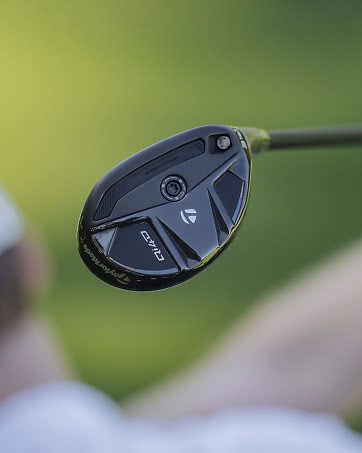
Hybrid
As the name suggests, this club type is a combination of two others—specifically, a fairway wood and an iron. Hybrids have become immensely popular, and for those who need extra help getting a bit more height on their ball flight, it makes sense to replace the lower-lofted irons with hybrids.
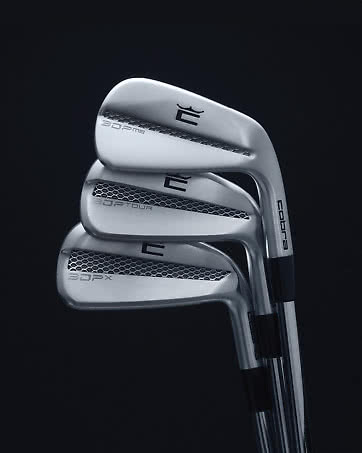
Irons
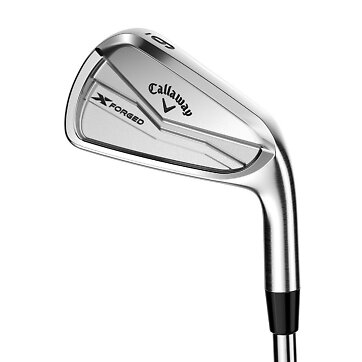
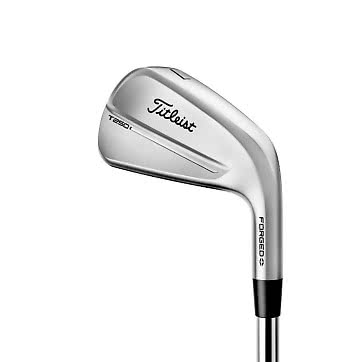
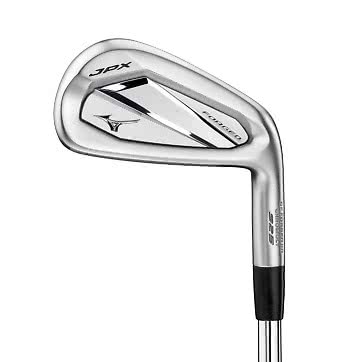
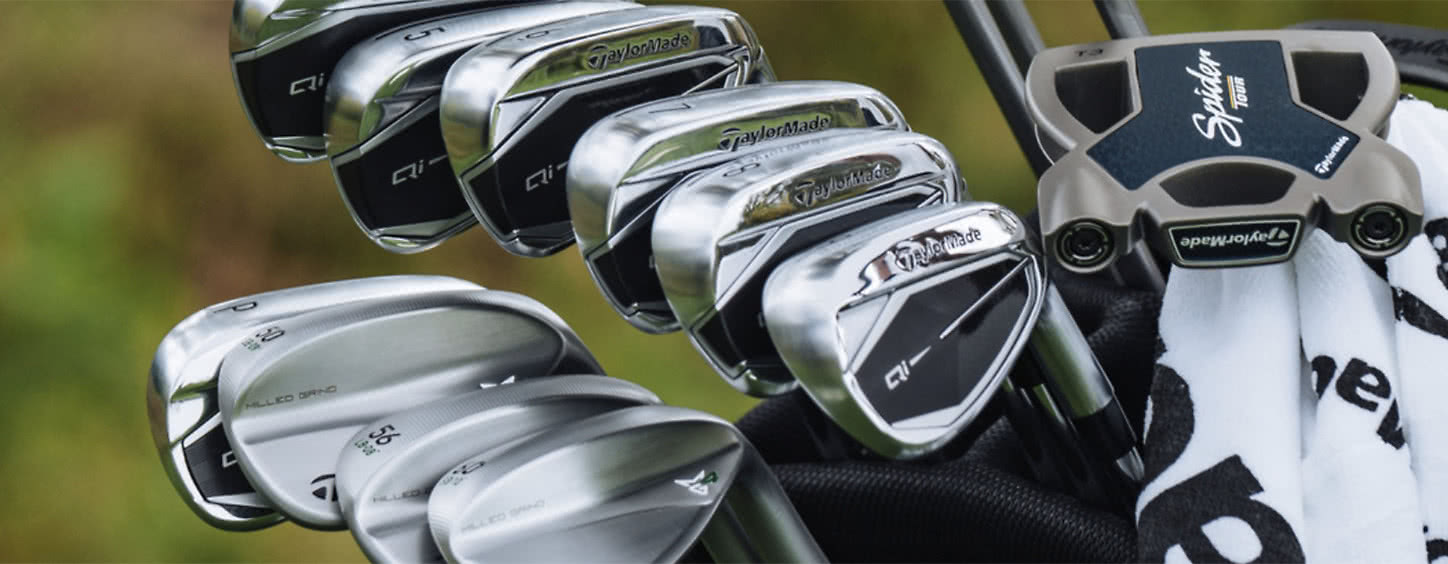
Irons are the foundation of most golf bags and are used for everything from approach shots to the green to tee shots on shorter holes. A set of irons typically consists of clubs with different lofts to provide the right distance and control throughout the game.
The playability of irons is influenced, among other things, by the clubhead design. Larger, more forgiving models help generate higher ball speed and better results on less-than-perfect strikes, while more compact models offer increased feel and control. For the best results, it’s important to choose irons that suit your swing and skill level.
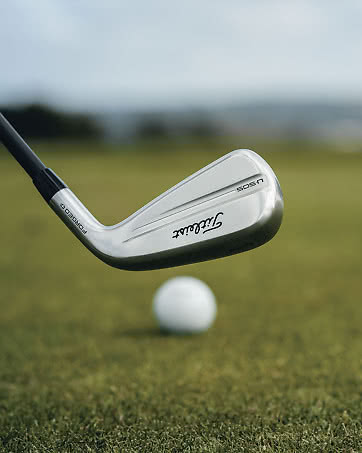
Driving Iron/Utility
This club type is relatively new and can be described as a cross between an iron and a hybrid. Visually, they look very similar to an iron, but the clubhead is actually hollow. Thanks to the hollow clubhead, higher ball speed is achieved even while maintaining the same swing speed.
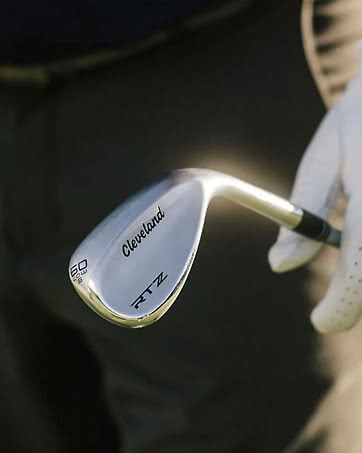
Wedges
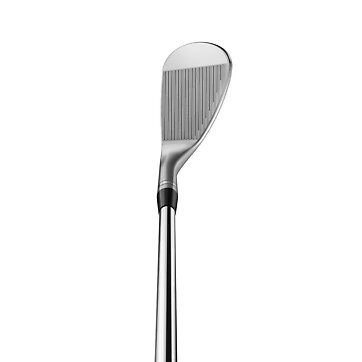
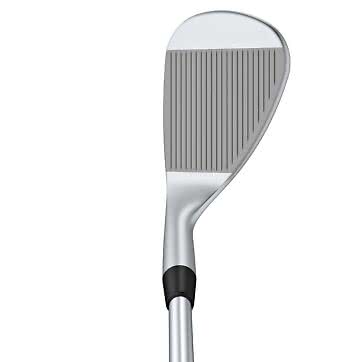
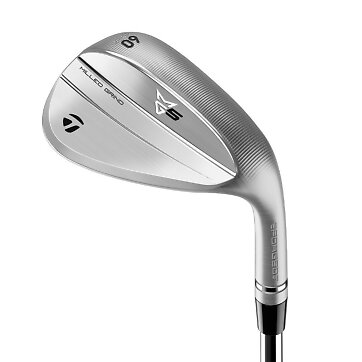
When it comes to wedges, there are a whole lot of different types of sets to play with. The two most important wedges to have in your bag are a pitching wedge and a sand wedge. As a beginner, it’s best to play with wedges that are the same model as the iron set you’re using. These wedges will be easier to play than “pure” wedges, which are actually designed like blade clubs.
A traditional set of wedges for an iron set where the PW is 46 degrees is 50-54-58 degrees. Four to five degrees is considered the optimal range between wedges.
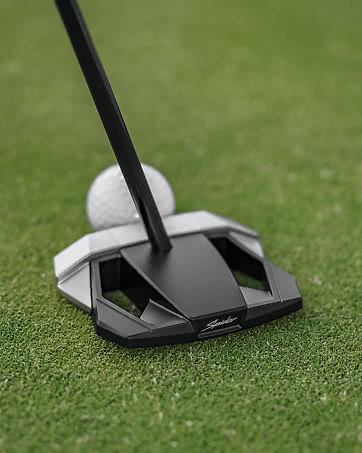
Putter
The most used club in the bag—the putter. When it comes to choosing a putter, there really is no right or wrong. However, there are a few things to keep in mind that generally suit different types of golfers. An important attribute to keep in mind when it comes to putters is the weighting, which can range from toe-hang to face-balanced. A toe-hang putter suits someone with a curved stroke, while a face-balanced putter suits someone with a straight stroke. Once you’ve determined what type of stroke you have, it’s just a matter of narrowing down your choices between blade putters and mallet-style putters.
Summary
We’ve all stood facing a headwind or tailwind and felt immense indecision about which club is the right one. Once the choice is made, there’s a risk you’ll still hesitate slightly, which will result in a swing lacking commitment. If, instead, you had taken every other iron out of your bag, the decision would have been much easier to make, and you could hit the shot you’ve decided on with more confidence.
Sure, we can agree that 14 clubs are more than enough, right? We believe in having clubs and shafts that suit your swing and your playing style; it doesn’t really matter if you have 7 or 14 clubs in your bag. It can be a real eye-opening experience to go out and play nine holes with just a driver, J5, J7, J9, a couple of wedges, and a putter. First and foremost, it’s a lot of fun to shape different shots with the same club, and at the same time, you’ll learn a great deal about how to play golf.